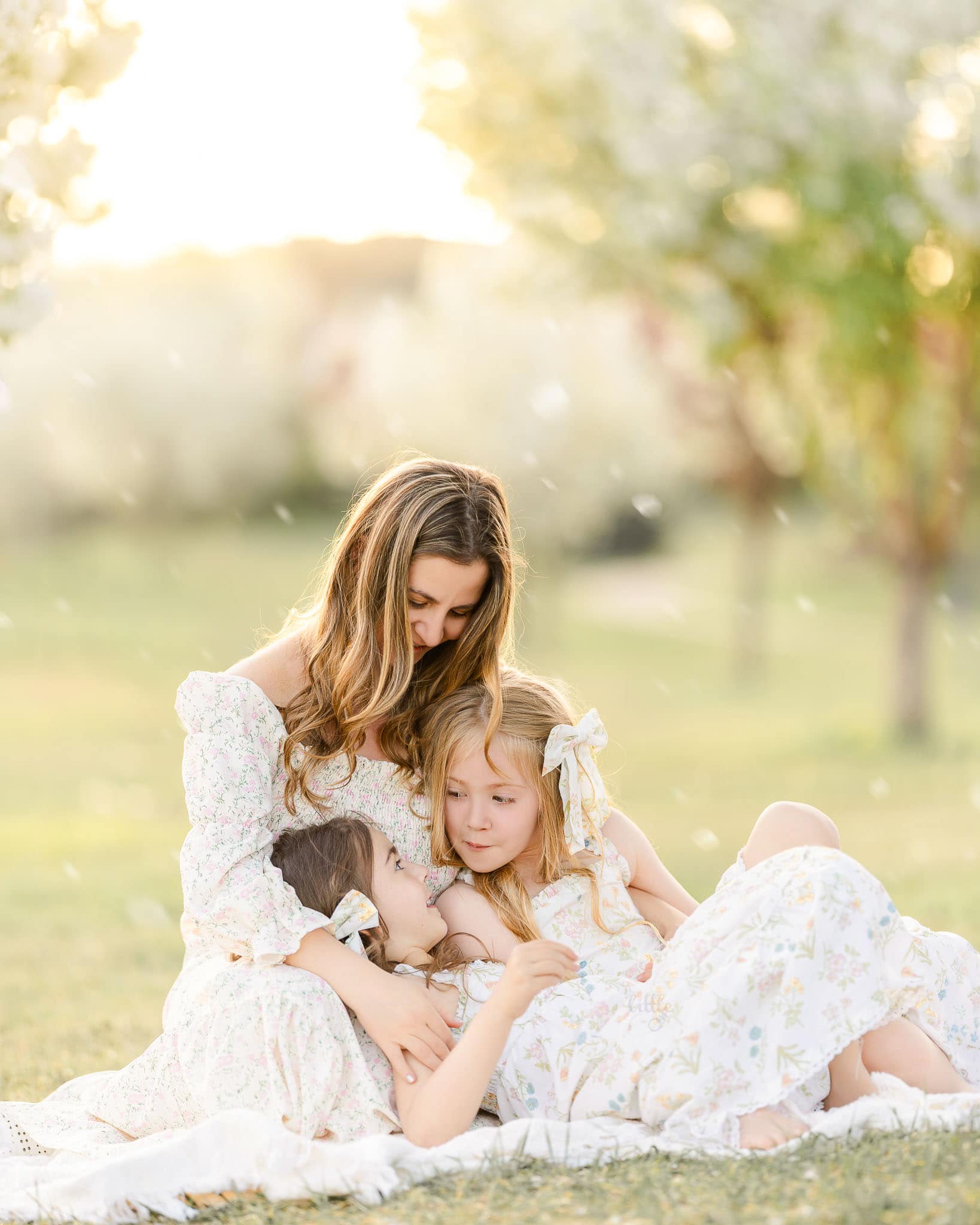
Sometimes I get a client referral, and they tell me that their friend’s family photos are amazing and they want to do exactly the same thing. But when I learn more about their family, I usually say:”Hey, we can have the same lighting, the same location, but your photos might look a little different.”
As a family photographer who has worked with all kinds of toddlers, I definitely treat different age groups differently. A well-engaged child is one of the most important factors in creating successful family portraits. There is no one solution that works for every child in family photography. One thing I’ve learned after photographing families in Edmonton is that there is no perfect age for family photos. A family photography session with a 2-year-old can feel completely different from a session with a 6-year-old, and that’s exactly why I approach them differently.
Here are some things I do differently for different age groups. These observations are based on my experience photographing many family sessions in Edmonton.
Table of Contents
How Different Ages React to a New Environment
Kids can be shy, but different age groups react completely differently to a new environment.
At age two, children may still experience stranger anxiety. Some cry. Some stay attached to their parents the entire time. Older toddlers usually react differently. Instead of crying, they often become quiet and hesitant. I usually spend the first few minutes of every family session greeting the kids and getting a basic idea of how they react to me.
With younger toddlers who have strong stranger anxiety, I actually find that ignoring them is the best way to help them relax. This might surprise you, but sometimes all I do is avoid eye contact and keep talking to the parents. I explain the games I want them to play and focus my attention on the adults. You’ll often notice the child secretly watching me the whole time. But as soon as they realize I have no interest in forcing them to interact with me, they usually start joining the game on their own. This might because social pressure and emotional connection can feel overwhelming for very young children.
Families with younger kids usually end up with more photos where parents are holding their children, and honestly, that’s perfectly normal.
With older toddlers, avoiding eye contact can actually make things worse. They’re old enough to understand emotions, and avoiding them can sometimes make them feel ignored or unwelcome. I usually start with a big smile and ask their name. And when I say a big smile, I mean a really big smile. As soon as they start talking to me, I begin asking about their hair accessories, their watch, their shoes, or any little thing they find interesting. Sometimes I talk about completely silly things. For example:
“Be really careful when you walk over there. Don’t step on any dog poop.”
That usually gets a reaction. Sometimes I give them little missions.
“Hey, I think we might find some mushrooms under that tree later.”
Older children often relax quickly once they realize we’re just having fun.
Families with older kids usually end up with more interaction photos, while families with younger children often have more cuddling and carrying moments.
This warm-up period is extremely important. A stressed child or nervous child will never fully show you their personality. Helping kids relax before the session starts is one of the most important parts of creating a relaxed family photography experience. This is one of the reasons I focus on creating a relaxed Edmonton family photography experience rather than expecting children to sit still and smile at the camera the entire time.
They Treat the Camera Differently
We all have phones that can take photos these days. Older children are usually used to their parents taking photos of them. As soon as they see my camera, they sometimes turn toward it and give me a huge fake smile. The first time I experienced this, I froze for a few seconds. I didn’t want to say:”No, don’t do that.” But it definitely wasn’t what I wanted either. It was a challenge for me at the beginning.
Now I’ve learned that by age six, many children already have a pre-existing idea of what taking photos means. It’s important to help them experience the fun side of photography right from the start. If a child thinks taking photos is boring, I’ll start with highly interactive games like Red Light, Green Light. Those games pull them into the experience so much that they often forget I’m taking photos at all.
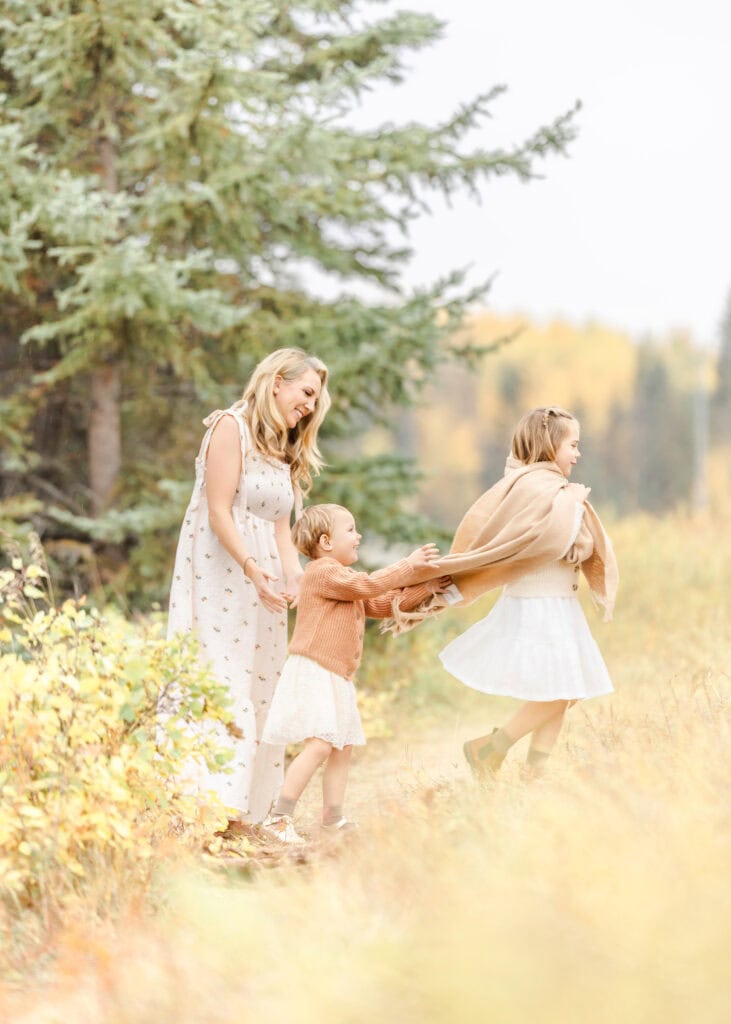
Once they’re comfortable with me and more comfortable in front of the camera, we can move into slower activities like cuddling, hugging, and kissing. For children with quieter personalities, I often do the opposite and start with calmer activities first.
With a two-year-old, I usually don’t start with high-energy games. They’re often still adjusting to a new environment. No matter how exciting the game is, they’re usually not ready for it yet. Trying too hard to make them laugh right away often creates stress for the parents as well. I usually start with simple prompts. Things like: “Can you hold your baby and do a little gentle dance?” As everyone relaxes, I slowly move into more active games like chase games and hide-and-seek.
How Different Ages Engage During Family Photos
I believe every child eventually goes wild once they feel comfortable enough. The important part is managing when that happens. Yes, I want children to be happy and engaged. But I also want them to listen to me a little.
Sometimes children become so comfortable with me that they start giving me a hard time. That’s usually the point where I lose some control over what we’re doing. This happens most often with my friends’ children or families I’ve photographed multiple times.
Younger children can be extremely shy at the beginning and then become wild very quickly. The first ten minutes they cry because of you. The next ten minutes they’re running all over the park trying to trick you. This is exactly why getting some quieter photos at the beginning of the session is so important.
We all know about the terrible twos. Once a two-year-old is fully relaxed, you can no longer completely control where they go or what they do. When a two-year-old becomes wild, I usually start talking in reverse psychology. For example:”Are you still able to catch Daddy? I don’t think so.” And when they do it, I immediately respond:”Wow! You did that? That’s amazing!”
Children at that age love proving what they can do. If I simply tell them: “I want you to play a chase game with Daddy.” There’s a good chance it won’t happen.
Older children usually don’t go completely out of control during a one-hour family session. But they can become emotional very quickly. One minute they’re enjoying a game. The next minute they’re sad because their parents told them not to climb a tree.
As a family photographer, my job is not only to click a button and come up with fun games. My job is also to understand their emotions and help them feel seen. If you’ve ever worried that a wild child is difficult to photograph, you may also enjoy reading my blog about why kids don’t need to cooperate during family photography sessions.
Final Thoughts
Parents often ask me what the best age is for family photos. To be honest, I don’t think there is one. A two-year-old and a six-year-old can both create beautiful family portraits. They are just beautiful in different ways. A younger child may spend half the session hiding behind their parents before suddenly running all over the park. An older child may happily tell me stories about mushrooms, dogs, or their favourite superhero before giving me their biggest camera smile. Neither age is easier. Neither age is better. They are simply different.
As a family photographer, my job is to understand who your kids are, what makes them comfortable, and what helps them enjoy the session.
Every family photography session is different because every child is different. The goal isn’t to make your children behave perfectly. The goal is to create family photos that feel like your family during this stage of life. The best family photos happen when children feel relaxed enough to be themselves

Samantha, the visionary behind Little One Photography, is a passionate photographer with a special gift for capturing the essence of newborns and families. As an awarded newborn photographer, she has honed her craft to create timeless, emotive portraits that families cherish for generations. Samantha’s warm personality and patient approach put even the tiniest clients at ease, allowing her to capture genuine moments of connection and love.